Category: Asteroids

  • Asteroid Icarus in Astrology

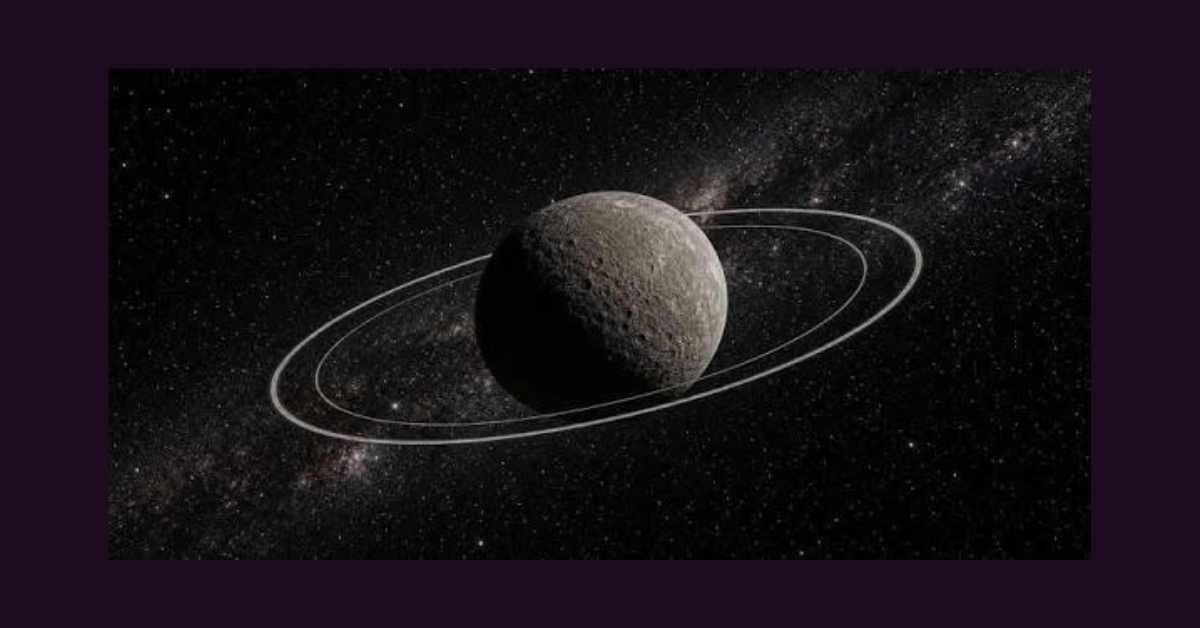
    Asteroid Icarus – Asteroid No. 1566 – Discovered on June 27, 1949

    How to read asteroid Icarus in an astrology chart (things it might want to express):
    -Where and how one might get a wild hair up their ass to do something.
    -Where and how one might do things that aren’t in their best interest.
    -Where and how one just can’t help themselves.
    -Might be where and how you need to “stay in your lane” but might be inclined to NOT do that
    -Where and how one might have too much hubris & ambition. On the flip side of that, it could also be where one doesn’t have enough hubris & ambition.
    –Where Icarus is in the chart feels like it ties in a whole bunch with finding your sweet spot. Not flying too close to the sun or flying too close to the water (or ground)…but flying at just the right height.
    –Might also represent where you ALMOST “got away”/ “escaped” in the natal chart per the mythology and Icarus & Daedalus escaping from the labyrinth (and Icarus ALMOST making it all the way to the finish line). Makes me think of someone in a horror movie ALMOST getting away from the killer but fucking up in SOME way and ending up stabbed. 
    **The actual etymology of the name means “plower” but is usually translated to either “follower” or “the one who reaches the sky.”**
    **Has an erratic orbit. When Icarus was discovered, it had the most erratic orbit of anything in our solar system**

    Side note: What is a prominent Icarus (or any asteroid) in a natal chart? In my opinion, you would want to see Icarus conjunct a natal planet, angle, North or South Node…things like that. Conjunctions should be kept to 3-degrees or less (applying or separating). Click this text to read my article on other things to consider when reading asteroids in an astrology chart. And if you want me to read your astrology chart (about Icarus, or anything!) you can get an astrology reading from me here. 

    Who was Icarus in mythology? He was the son of the craftsman Daedalus, who along with his father, was imprisoned in a labyrinth that Daedalus created (backstory! – they were accused by King Minos of helping Theseus escape the same labyrinth and their punishment was they were stuck in the labyrinth). To escape, they created some wings made from feathers, threads from sheets, beeswax and leather straps from their shoes. Daedalus explained to Icarus that he didn’t want to fly to close to the Sun or the wings could/would melt. He also told Icarus that he didn’t want to fly too close to the water or the water could/would weigh down the wings. As they were flying away Icarus decided to go against his father’s warnings (probably because he was enjoying flying around) and started to soar higher and higher. Soon though, he flew a little too close to the Sun and the beeswax in the wings melted leaving Icarus without any wings at all. This caused him to fall into the ocean…where he died. 
    **There is another version of the mythology where Icarus and Daedalus escape the labyrinth via boat. In this version Icarus falls off the boat and drowns in the ocean. Per this version of the mythology, it wasn’t wings that they made, but Daedalus crafted the first sails for a boat. 

    The orbit of Asteroid Icarus isn’t lost on me within the context of his story. In the mythology, he KNEW better than to fly too close to the Sun or too close to the water. Instead of listening to the warnings from Daedalus, he got a wild hair up his ass and decided to (essentially) go off course. Therefore, it doesn’t surprise me that the orbit of the actual asteroid Icarus wouldn’t seem to stay on any kind of normal course/would have a more erratic orbit.

    Speaking of that notion of getting a wild hair up one’s ass where Icarus is in the chart (and how by sign), there is ALSO the notion of doing things that aren’t in one’s best interest. Like…it probably felt REALLY great for Icarus to fly around with the wings, but was it in his best interest to keep going higher (no matter how good it felt or how fun it was)? No, it wasn’t. There is also the idea of asteroid Icarus being where we ignore the warning signs of things that, perhaps, we shouldn’t ignore. Both of these sorts of notions should be “monitored” where asteroid Icarus falls in a chart (so the person doesn’t do themselves dirty).

    The mythology causes people to talk a lot about Icarus and soaring too high too quickly (being too ambitious, etc.), and the fact that he didn’t listen to his father’s warnings about how to fly safely. While asteroid Icarus can totally show this where (by house) and how (by sign) that one might be too ambitious, have too much hubris, not listen, etc., I would like to counter that with another possibility. What was the warning that Daedalus gave to Icarus? To not fly too close to the Sun OR too close to the water/ground. Icarus in a chart, in some people’s cases, could be where someone ISN’T ambitious enough/doesn’t “fly high” enough/doesn’t have enough hubris, etc. How this actually plays out for the person (too much or too little) really depends on the whole chart. 
    **Before anyone jumps my ass for this take (hahahaha), Icarus DOES tend to be where there is TOO much hubris, ambition, etc. But! I have certainly seen this asteroid play out the other way where there is TOO LITTLE ambition, hubris, etc. that is exercised by the native. 

    Ultimately, where Icarus falls in the chart seems like it’s a place where a person needs to find the “sweet spot,” and how the sweet spot is found depends on the sign this is taking place. Should Icarus conjunct a natal planet, it is even more important that the person finds the “sweet spot” with what that planet wants to express. For instance, I have Icarus conjunct Neptune in the first house in Capricorn in my chart within 2-degrees. If I wanted too, I could probably let myself completely carried away with the illusionary & escape elements of Neptune (even though it’s in Capricorn it still seems possible). On the flip side of that, I could probably turn off everything Neptune wants to express as well (which wouldn’t be very good, either). 

    There is another asteroid to consider regarding Icarus, and that is the asteroid Daedalus (asteroid no. 1864). By all accounts, Daedalus seems to be presented as wise and a talented craftsman. He also appeared to be a father who cared about his son and wanted what was best for him. Icarus did what most children/teenagers will do at some point – essentially give the middle finger to their parent (even though it was to his detriment to do this). Daedalus grieved his son and gave his own wings as an offering at the Temple of Apollo, promising to never try to fly again. Daedalus in a chart could be a place that we have “grief” and “loss” that we have to deal with in some capacity (more on grief and loss in a future blog post). The asteroid Daedalus might also indicate where (by house) and how (by sign) we might warn people about things…and our warnings get ignored. 

  • Guide for How-To Read Asteroids in an Astrology Chart

    Asteroid Astrology! While asteroids aren’t necessary to read a chart (the meat and potatoes will always be with the planets, the nodal axis, etc.), they can add another layer to chart weaving (and asteroids are also just A LOT of fun!). A friend of mine made the comment a while back that the incorporation of asteroids is like the fine tuning of an instrument, and I couldn’t agree more with this sentiment. As I’ve been going through my website (on the back-end cleaning things up), I noticed that while I have certainly written about certain asteroids (and have done even more videos for the YouTube channel on asteroids) I have never written about HOW to read asteroids in a natal chart….so that’s what this post is about. Obviously, this is an opinion piece, MY opinion on how to read asteroids in a chart. But! The way that I do this does resonate with clients, so I feel like I’m doing something right with the way that I approach reading the asteroids.

    First of all, there are SO MANY asteroids to choose from in the asteroid databank, it can be overwhelming to figure out where to begin. If you are wanting to start fucking with asteroids but aren’t sure where to start, Chiron should be at the top of your list with which to look. Starting with some of the major ones to see where they land in your chart like the Asteroid Goddesses (Vesta, Pallas, Juno, and Ceres) might be a good way to enter the asteroid waters as well. If there is a certain character in mythology (or a historical figure) that you feel particularly drawn, pulling the asteroid for them (should one exist) might be where you start.
    As a sort of side note, I don’t even treat Chiron like an asteroid (I never have) 🤣 and I will pull it in EVERY client chart that I pull (so the stuff I am about to say about how I read asteroids, these “guidelines,” don’t apply to Chiron). It may not get mentioned or talked about in every reading that I do for clients (depends on what a client is coming to me for and/or the organic movement of the reading/the way that it goes), but Chiron always gets a few notes made about it in my notebook.
    **You may feel the same way about another asteroid that I feel about Chiron. Definitely go with your intuition; if another one feels that important to you, definitely pull it in ALL the charts you look at (or as many as you want).

    ***The asteroids numbers for the Asteroid Goddesses mentioned above are as follows:
    -Ceres is no. 1
    -Pallas is no. 2
    -Juno is no. 3
    -Vesta is no. 4


    This next part might piss some people off 😂 but this is generally how I approach asteroids:

    1. Conjunctions get most of my focus when it comes to asteroids. Generally speaking, if I don’t see an asteroid conjunct a planet, the nodal axis, an angle, etc. the asteroid doesn’t usually stand out to me. The conjunction between an asteroid and a planet, the nodal axis, an angle, etc. is what makes the asteroid important and prominent in a chart (in my opinion).
    **I would use an orb of no more than 3-degrees applying and separating for the above (this is my personal preference when reading; if you want to extend the orb further or bring it in tighter, by all means do it ^_^).
    ***Why does the above matter so much to me? Because if an asteroid is conjunct a planet (or angle, nodal axis, etc.), then the planet, etc. is a vehicle for that asteroid energy to flow through. For instance, let’s say Ceres is conjunct Jupiter in a chart. Ceres (and the things that she wants to express like nurturing and nourishing) are infusing Jupiter (and vice versa), quite literally being expanded upon. HOW this comes out depends on the sign of Ceres and Jupiter, and WHERE/AREAS OF LIFE that this comes out depends on the house that they fall in the chart.

    2. Make sure to bring the planetary ruler of the asteroid into the equation when reading asteroids. Since Asteroids don’t rule anything (not officially anyway, though there are arguments for certain asteroids having certain rulership over some of the signs), you want to bring the asteroid’s rulership into play. For instance, let’s say you (or someone) has Ceres that is conjunct Jupiter within a degree in the chart – that’s a prominent Ceres! Let’s say that Ceres and Jupiter are in Libra. That would make Venus the planetary ruler of Ceres in this chart. Does Ceres make an aspect with Venus? If it doesn’t, I would consider this to be a neutral thing. However, if Venus makes an aspect with Ceres, it gives a strength to Ceres’ prominence and importance. The challenging aspects (the square, opposition, and quincunx) might put some stress on the prominence (and how the person’s Ceres functions). The harmonious aspects (the sextile and trine) might give some ease to the way that Ceres functions in the chart. Either way, if an aspect between an asteroid and the planetary ruler of an asteroid make an aspect in the chart, it gives the asteroid strength.
    **The above should FOR SURE be considered if you are looking at an asteroid in the chart that doesn’t make a conjunction with a natal planet. For instance, let’s say you have Ceres in Libra and Ceres doesn’t conjunct a natal planet, angle, etc. (so it doesn’t appear to be very prominent). In a case like this you would want to see if Venus (the planetary ruler of Ceres in Libra) makes an aspect with Ceres (and what kind of aspect). If an aspect is made, it gives strength or importance to Ceres in Libra.
    ***The planetary ruler of an asteroid (by sign and house) should always be looked at and considered when reading asteroids regardless of what the asteroid is doing in the chart***

    3. I don’t (usually) give a shit about a random asteroid trine/sextile/square/etc. another random asteroid in a natal chart (ex: asteroid Psyche trine asteroid DNA). From my years of practice (and even more years of study), I find that most of the time aspects between asteroids are “fine-tuning” or “backing up” other things already laid out in the chart. The only times that I don’t feel this way about aspects between the asteroids are as follows:
       a) When you have asteroids conjunct one another. This MIGHT stand out to me due to the concentration of energy and it would stand out to me even more if we’re talking about a conjunction between asteroids making an aspect with the planetary ruler of the asteroids in the chart. For instance, if you have Psyche (asteroid no. 16) and DNA (asteroid no. 55555) conjunct one another in Scorpio and Mars and/or Pluto (planetary rulers of Scorpio) happen to aspect Psyche and DNA.
       b) When asteroids that are part of a “pair” happen to aspect one another. For instance, let’s say you have Eros (asteroid no. 433) and Psyche making a square aspect in your chart. THIS would be an aspect between asteroids that I would take note since their individual mythology’s tie them together (they can absolutely be read separately, too).
    **Keep the aspects between asteroids in a case like the above really tight (maybe 2-degrees applying or separating max. if even that much).

    4. DO bring mythology and word meaning into play when looking at asteroids. This, in my opinion, is how you figure out how to read them in the first place. Want to read Pallas in your chart? Become familiar with her mythology. What was she like? What were her strengths and weaknesses? Look at the asteroids in a chart from the lens of “the light” and “the shadow” expressions of energy (because just the planets have a light and shadow, so do asteroids – nothing is universally “bad” or “good”).
    -The same thing can be said about word (and name!) asteroids. For instance, there is an asteroid named “dick” (asteroid no. 17458). Lol obviously there isn’t a mythology behind “dick” (or maybe there is 🤣 who the hell knows) but think about what the word “dick’ means and translate it accordingly. For instance, let’s say you have the asteroid “dick” conjunct the Descendant in Taurus. This could maybe be translated as “the person might attract stubborn (Taurus) dicks into their life.” It could also be translated as “the person might be a stubborn dick and not want to acknowledge such about themselves.” (I make the last part of that comment since we are talking about the Descendant in this hypothetical case, and the Descendant can be a shadow part of ourselves that we know exists but don’t want to acknowledge, pay attention to, etc.).

    5. Another thing to bring into play when reading asteroids is the orbit of the asteroid in question. What is its orbit like? For instance, I think of Chariklo (asteroid no. 10199) as wanting to express many different things, but boundaries are one of those things. The reason for this is not only because of her mythology but also because of her orbit between Saturn and Uranus, and how she never crosses over into either of Saturn or Uranus’ orbits (essentially, she “stays in her lane” and knows boundaries).

    Here is a tip for getting started with asteroids: Don’t throw in every asteroid possible at once when looking at a chart. Do you know how overwhelming it is to look at a chart with 15 fucking asteroids thrown into the mix 🤪??!! Lololol I do this professionally and looking at a chart with that many asteroids thrown in makes my brain feel like it’s going to short circuit 😂. This doesn’t mean that you can’t look at several different asteroids, but I would start with a few (say, the Asteroid Goddesses…or something like that). After looking at those few, make notes of where they fall in your chart. Then take those that you’ve made notes on off the chart and enter a few more. Rinse a repeat. This way you’re only looking at where, maybe, 5 asteroids are at once versus 15. You’re also able to ascertain which ones are actually important to your chart (which ones deserve to get pulled again later).

    Do you want another set of eyes on your chart? Book a reading with me (about asteroids or any kind of natal chart reading)!

  • How to Read Asteroid Chariklo in a Natal Chart

    Asteroid Chariklo – Asteroid Number 10199 – Discovered on February 15, 1997

    How to Read Asteroid Chariklo in a Natal Chart (things she might want to express):
    -States of transition or being in a state of flux
    -Where one may not get the “credit” they deserve (or may not give themselves the credit they deserve)
    -Devotion, duty, and love (and being devoted, dutiful, and loving in relationships)
    -Healing with feminine/receptive energy (and transmutation of pain)
    -“Wise Woman” archetype (or just “wise female/receptive energy”)
    **Even a place where the feminine and masculine sides of energy are blended
    -Boundaries
    -Doing things (all of the above and more!) with grace and tact
    **The name Chariklo means “Graceful Spinner”

    As I have started going through the motions of cleaning stuff up across the board (on the site, on the YouTube channel, etc.), it was noticed that THIS blog post was started two years ago and never finished. Absolutely unacceptable on my end because I love Chariklo so much (I really, really do!). Also, I recently had a client with Chariklo prominently placed in her chart which we spent a good part of the reading talking about.

    To say she’s been on my mind lately is an understatement, lol.

    It’s also been a long time since I’ve done a blog post….and it’s about damn time I did one. Chariklo seemed like the perfect subject with which to jump back in.

    Side note: What is a prominent Chariklo (or any asteroid) in a natal chart? In my opinion, you would want to see Chariklo conjunct a natal planet, angle, North or South Node…things like that. Conjunctions should be kept to 3-degrees or less (applying or separating).

    Who was Chariklo in mythology? There really isn’t much known about her on her own (which makes her own mythology/origin story a little harder to pin down). What IS known of her comes from the mythology of Vesta, Pallas, and most importantly Chiron with whom she was partnered. The relational quality of her mythology (and her being best known as the partner of Chiron) makes her tie to relationships important in a chart regardless of where she falls.
    **There is more that I’ll say about the relational aspect further into this post, but because she doesn’t have much of her own mythology (which feels criminal) she does feel like a place in the natal chart where one might not get the credit that they deserve from other people, in relationships, etc. She also seems like a place in the chart where one might not give themselves the credit they deserve, either.

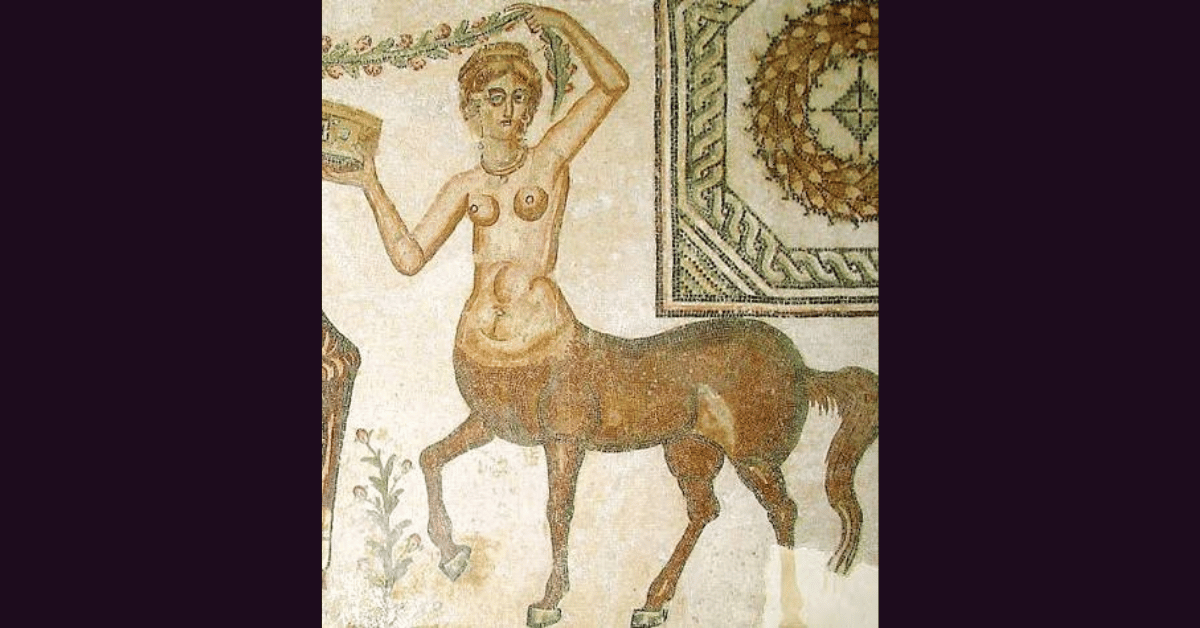
    Her origin story is a little different depending on what version(s) of someone else’s mythology you read. In some versions she is said to be a water nymph, in some versions she is a “shapeshifter,” in some versions she is a centaur herself…and in some versions she is a shapeshifter that turned into a Centaur. Regardless of HOW she started out or what she actually was, there is a transitional quality or state of flux to her because ALL of these possible ways of being have some kind of transitional quality to them. She is thought of as being healing for people who are in a state of transition (HOW that healing can come about depends on the sign Chariklo falls in the chart and WHERE this comes about by house). Chariklo can also point to where (by house) one might find themselves in a state of transition or a state of flux in different ways throughout the course of life.

    She is also thought to deal with boundaries. Her orbit happens to fall between Saturn and Uranus (like the other Centaurs), but her orbit never crosses over into either of the orbits of Saturn and Uranus (some of the other Centaur orbits do). This tells me that she can stay in her own lane, so to speak. Another thing about boundaries –  Chariklo was a friend/aid to Vesta. Not just anyone was allowed into Vesta’s temple and not just anyone was allowed to “know” Vesta, either. For this reason, Vesta has always seemed to deal with boundaries (among other things), and it does make sense to think that the characters she allowed to know her probably knew boundaries, too.
    *A shadow of all of this, the boundary thing, might be someone who doesn’t stay in their own lane like they should, or even someone who has their own boundaries constantly crossed (or doesn’t know how to enforce boundaries in the first place).

    Chariklo was also a friend/aid of Pallas (and Pallas also has a transitional quality to her, ideally in trying to find a balance between masculine and feminine energy (that’s a whole other thing I’m not getting into right now hahaha)). Pallas also deals with creative intelligence, seeing patterns, connecting dots…things like that. While Pallas did know how to be diplomatic, she didn’t always hit the mark with this (sometimes she was a little more “ferocious” for whatever reason). All these qualities make me think that Pallas wouldn’t have had Chariklo as a friend (or even just an aid) if she hadn’t been intelligent herself (Pallas was too smart to hang around a dumbass), hence the “wise woman” (or wise female energy) archetype. It also seems that because Pallas was a more “masculine” female (or a female more tapped into the masculine side of energy), she probably would’ve needed a friend or an aid to AT LEAST be able to tap into this energy as well. Chariklo (to me) has always felt more feminine/receptive than masculine, but her transitional nature makes me think that she can probably blend the masculine and feminine ends of energy nicely (perhaps in an even more natural/fluid way than Pallas might be able…though it is important for Pallas to figure out how to do this as well).
    **As a side note, when I talk about “masculine” and “feminine” energy, I am NOT talking about sex and/or gender. I am talking about the kind of energy that we ALL have inside of us (or can tap into) regardless of gender or sex.

    The mythology where Chariklo gets mentioned the most is in that of Chiron, where she is described as the dutiful, devoted and loving partner to the “wounded healer.”Ahhh, the notions of devotion, duty, and loving! Let’s talk about this:
    -Chariklo in a chart could show where (by house) one feels a sense of devotion and/or duty (in relationships, specifically), and how this might manifest would be indicated by the sign that Chariklo falls. Here’s the thing about devotion and duty – sometimes we feel that we must be devoted or have a sense of duty towards something/someone that we don’t want or that isn’t good for us (or that isn’t as devoted, or duty bound to us as we are to them). This could manifest as a shadow of Chariklo (devotion and duty towards something that we don’t want to be devoted or have a sense of duty towards, something that isn’t in our best interest, etc.). However, when that devotion and/or duty IS wanted (and is “good” for a person), Chariklo can do devotion and duty in the most loving and giving of ways.
    –There is nothing in the mythology to suggest that Chariklo didn’t want to be devoted, dutiful, and loving towards Chiron, but it still seems like something that needed to be brought up as a possible shadow since there is a “light” and a “shadow” to everything.
    **Vesta was also incredibly devoted, so this notion of devotion is another alignment between the energy of Chariklo and Vesta.

    While it is never explicitly stated that Chariklo was a healing force herself (like it is for Chiron), it stands to reason that Chiron probably would’ve needed be in a partnership with someone who was like him in this regard. For this reason, I do think of Chariklo as a healing force herself, and as a place of healing in the chart (and a place where healing can transpire). I think there is even something to be said about Chariklo in a natal chart being a place where an individual’s Chironic wounding can be healed (maybe not universally, but I have seen this in a lot of the charts of people I’ve read for). The thing about the healing quality of Chariklo; she can’t be used as a “trashcan” for Chiron’s wounding (or for the wounding of another person in relationship with us). Since we never read in the mythology about Chiron being “healing” for Chariklo or having the same sense of duty/devotion to her as she had to him, this part does need to be brought up here as a possible shadow of Chariklo – being a possible place in the chart where we take on the pain/wounding of someone (or something else), functioning as a dumpster for the pain of wounded people or a wounded something or another (and also being healing for someone else when they only wound us in turn). This needs to be watched by everyone, but for those that have a prominent Chariklo in their natal chart this REALLY needs to be watched. At the same time, though, I do think Chariklo is a place where one can be healing for other people (just like Chiron can be). Any pain that may be taken on from other people has to be transmuted into something else (and the same thing could be said about Chiron’s wounding in a natal chart being healed by Chariklo, and Chariklo needing to transmute this as well).
    –How this transmutation would “best” take place would depend on the chart in question.

    Chariklo can do things with grace and tact – her name translates to “graceful spinner”. This makes me think that she can do ALL the things mentioned above with, well, grace and tact. She also has the innate wisdom to know how to do the above.  We ALL have this asteroid in our charts somewhere – how and where we tap into all of the above depends on where she falls in your chart. If you want me to read Chariklo in your chart (or any kind of astrology reading), click here! Curious about a reading but not sure what you’re looking for or if I do the kind of reading you want (I probably do!), shoot me an email at ellie@saturnseason.com

    As a personal side note: I really am a huge fan of Chariklo and she has been SO healing for me to tap into. She popped into my radar in 2021 when I was in a state of flux myself (waiting for myself or my ex-husband to pull the trigger on the start of divorce proceedings). Once she was in my frame of reference I started working with her and NOT ignoring her. We started divorce proceedings in February of 2022 which was around the time I filmed the first video I made about Chariklo and really started talking about her rather than just working with her on my own (you can find the second video I filmed about Chariklo here). Interestingly enough, the video I filmed about Chariklo was the last one I ever wore my wedding ring while filming – in fact, it was right after I filmed that video that I took it off for good and never put it back on. I think, just by talking about her at that time, I was able to further tap into her energy when I needed her wisdom more than anything (and to be able to see the “wise woman” in myself, too).

  • Asteroid Nessus in an Astrology Chart (and what it might mean)

    Ahhhhh Nessus! The centaur in mythology generally gets dubbed as the “abuser” asteroid in astrology. While, yes, I do think that Nessus can tie to abuse (and the propensity to abuse), this feels like a more extreme way that this asteroid can play out. Before getting into WHAT this asteroid can signify in a chart, let’s talk a little bit about his mythology.

    Also, just for reference: Nessus is asteroid no.7066 in the asteroid databank.
    ……and here is a video I did on this for those that prefer watching over reading.


    Who the fuck was Nessus? He was a centaur who was the son of Centauros (and Centauros was the son of Ixon and the nymph Nephele). In some versions of the mythology, it is mentioned that he is the son of Ixon and Nephele (so I’m really not sure who the fuck his parents were hahaha and it probably doesn’t matter for the purposes of this post….I just like trying to nail down the family tree). Like most of the centaurs (sans Chiron), Nessus was rowdy and debaucherous – always down for fucking and fighting, especially once a little wine or whatever entered the system. He was also one of the surviving centaurs at “The Centauromachy,” the wedding of Pirithous & Hippodameia, which was a battle where a bunch of centaurs died (the post that I did on the centaur Hylonome explored this event).

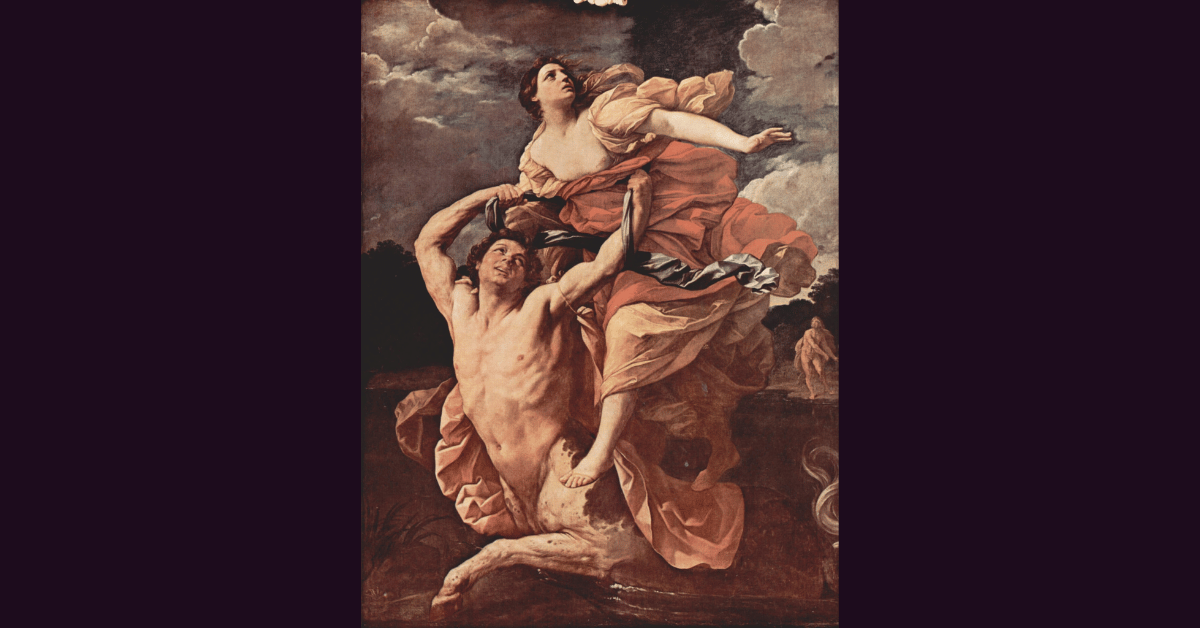
    What Nessus is probably the most known for is his story with Hercules and Dejanira (also spelled Deianira). After the Centauromachy, Nessus fled to the river Euenos and became a ferryman taking people across the river. One day, Hercules and his partner Dejanira needed to cross the river, so Nessus ferried Dejanira across while Hercules went across on his own. Why the hell Hercules didn’t take his partner across is a mystery lol. Anywho, Nessus is taking Dejanira across and becomes overwhelmed with uncontrollable desire or some bullshit and decides to rape her (some versions of the mythology say that he just attempted this, and some versions say that he actually did rape her – either way, it’s fucking gross). Hercules sees this and is obviously pissed, so he shoots an arrow at Nessus that has hydra blood on it. The arrow contacts Nessus and kills him. Before Nessus dies, though, he tells Dejanira to essentially save some of his blood to use on Hercules should Hercules ever fall out of love with her. He claims that his blood will cause Hercules to fall back in love with her. Then he dies.

    Cut to a few years down the line – Hercules has started to fall out of love with Dejanira (or she suspects that he is falling out of love with her). To keep Hercules loving her, she decides to use the blood of Nessus on him. She put the blood of Nessus on a robe that belongs to Hercules, he puts the robe on and instead of the blood causing him to fall back in love with Dejanira….it kills him.


    Now, from just this quick and dirty version of Nessus’ mythology, we can see a few different themes that exist, and these themes play into how this asteroid can be read in a natal chart.


    1. Nessus in the chart feels like a place where we might not be able to control ourselves (or want to control ourselves)
    -In his mythology, he appeared to lack a bunch of self-control. This isn’t entirely unique to him; most of the centaurs lacked self-control. Specifically with Nessus though, and the mythology that he shares with Dejanira, it seems that he really lacked self-control. Is it really that he LACKED self-control, or did he just not give a shit? It could be a little bit of both in the case of Nessus, and I think BOTH could be the case where Nessus falls in the chart.

    2.Trickery
    -Clearly, this little fucker was a trickster with his tricking of Dejanira (telling her that his blood would keep Hercules from straying from her).
    –Why did Dejanira believe Nessus in the first place? Who the hell knows.


    3. Revenge
    -Since Nessus couldn’t have his way (or completely have his way) with Dejanira, Nessus tricked Dejanira about his blood being a sort of love potion. This allowed him to get his revenge on BOTH her and Hercules (who is the one who killed him). Nessus in the chart could point to where (by house) and how (by sign) that the person might be inclined to get revenge (or handle things like revenge).


    4. The notion of “Bad Blood”
    i. This could be having “bad blood” with someone else (or the possibility of that) in synastry. For instance, someone’s Nessus conjunct your Sun could point towards a possibility of having “bad blood” with them eventually. Obviously, this doesn’t have to happen, but it could.
    ii. Actual blood issues that the native might have.


    5. Abuse & Abusing
    -This feels like the most extreme way that Nessus could come out in a natal chart (and it’s not always my go-to way to read this asteroid). We ALL have the propensity to play the role of the abuser and the abused – this is just human nature. Can Nessus signify the possibility of being abusive, though? Yes.

    Along with Nessus, you can also pull Dejanira in a natal chart (her asteroid is no. 157). From the mythology, there are a few ways that I think Dejanira can manifest:

    1. Dejanira in the chart could show where (by house) and how (by sign) that a person might be kind of “dumb.” Maybe “naïve” is a nicer way to put that. Keep in mind that I’m not ragging on anyone in particular – we all have Dejanira somewhere in our charts so that propensity to be “dumb” or “naïve” exists in all of us.
    **That might sound pretty harsh – I’m sorry. It does make sense within her mythology, though.

    2. Dejanira in the chart could also show where we have the propensity to be tricked or hoodwinked. She was definitely tricked by Nessus, which is why this is another way to read her.

    3. Dejanira in the chart, in her most extreme manifestation, could show the propensity to be abused. Where this happens would depend on the house that Dejanira falls in the chart, and how this could manifest is figured out by sign.  

    Do I always read these two asteroids in a chart? No. Do I always pull them in synastry? No. I will definitely pull them if requested, though (and click here if you want me to do any kind of astrology chart reading for you). If you find out that you have a prominent Nessus and/or Dejanira in your chart, the themes mentioned above might be ones to be aware of (or aware of their propensity to come about more often in your own life). They don’t have to manifest themselves in the most extreme examples, though.
    **In my opinion, a “prominent” Nessus and/or Dejanira would be either of these asteroids conjunct a planet, an angle, the north or south nodes, etc. within an orb of 3-degrees or less applying and separating.

  • The Asteroid Hylonome in an Astrology Chart (and what she means)

    The asteroid Hylonome (asteroid number 10370) has been on my mind a whole bunch recently. Maybe it’s because some of the things that she represents have been a part of my life in different ways as of late (throughout most of 2022)….which is probably why she’s been on my mind and in my sights recently. So much grief and bullshit that has needed to be released.

    If you are more of a watcher than a reader you can find me talking about Hylonome here 🙂
    ….and if you would like me to read for you, you can get a reading from me here.


    Hylonome’s mythology is rather sparse – there isn’t a whole bunch on her, but her story is impactful none-the-less. Hylonome was a centaur who was the partner of Cyllarus. It is said in Metamorphoses that “many centaurs would be his mate, but one gained his heart; this was Hylonome.” It seems like this is made a big deal of in the mythology – that he chose her. I’m not saying that she didn’t choose him, too (she probably did), but it does seem to be mentioned specifically that he could’ve had anyone, and he chose her. It is also mentioned that she would do things to beautify herself for him such as “combing her glossy hair and twined her curls in turn with rosemary…” and “took care to look her best.” It is also mentioned that “she alone by love and love’s sweet words and winning ways held Cyllarus.”
    -Now….I want to interject here for just a second. Maybe I’m not reading the “correct” version of the mythology, but it seems that she was very busy trying to be some kind of perfect version of herself for Cyllarus, but I don’t read ANYTHING about him trying to be perfect for her. This is interesting to me because it is stated in the same material that “their love was equal.” Maybe it was, maybe it wasn’t, but it doesn’t seem like the effort put in to please one another was very equal. This also brings up the question of if she ever asked for him to do this perfecting of himself for her, or if he even asked her to do any of this perfecting in the first place, either.
    –There has always been pressures put on people to “look” a certain way, and while this isn’t at all unique to females, I do think that historically there has been more of an emphasis placed on the way that women look and “keep” themselves. I will spare everyone from going on further down that tangent, lol. Essentially, what may have been expected of (or conditioned in) Hylonome may not have been expected of (or conditioned in) Cyllarus, and Hylonome may have been fine with that. I still think this piece fits into how she can be read, which is why I bring it up.

    Hylonome and Cyllarus went to the Lapithae’s Palace for the wedding of King of the Lapiths, Pirithous, and Hippodamia (and just for reference, the Lapiths and the Centaurs are kind of thought of “brothers” or brother species). At this wedding, the centaur Eurytion got fucking wasted and tried to fuck the bride, and started a massive battle known as “The Centaurmachy.” A bunch of fucking centaurs died in the middle of this battle, and Cyllarus was one of them. He was hit below the neck but above the chest with either a spear or javelin, and it wasn’t mentioned who stabbed him (so it seems like he wasn’t hit on purpose – more like he was just hit by virtue of being in the fray). As he laid hit by this weapon, it is mentioned that Hylonome held him close and tried to soothe him. It also makes it seem like she was the one who pulled the weapon from him (it could’ve been Cyllarus himself, who knows), but once the weapon was pulled from his body, he started to bleed out and then he departed the Earth. Filled with grief, Hylonome decided to kill herself with the same weapon that killed Cyllarus. This is where her mythology ends.

    Hylonome appears to have themes of grief and loss running through her, and this how I would read her in a chart. This is the kind of grief and loss that is so profound that one doesn’t know what to do with themselves because of it. There is also what feels like a co-dependency thing that stands out with her story – because Cyllarus died, she decided that she didn’t want to go on living anymore. Every time I read the mythology, and I get to the part where she is about to “fall on the javelin,” I’m thinking in my head “GIRL DON’T YOU FUCKING DO THAT.” An astrologer friend of mine who I won’t name but who’s opinion I value very much mentioned that he didn’t read Hylonome as co-dependent, but more like after Cyllarus died she “wasn’t going to play anymore” – an intentional choice. The more I think about this, the more I think the co-dependency notion AND the intentional choice can play a role with how Hylonome functions in a chart (or in transit)…it just depends on if she is functioning  a higher or lower vibration within a person (and I also think it’s just as possible that she can function like a little of both – it doesn’t have to be solely one or the other).

    Since Hylonome deals so much with grief in general, I have definitely started reading her along side the asteroid Grieve (asteroid number 4451). It may not be necessary to do this, but I do think with her story (and what she is known for) having so much to do with grief it’s an interesting thing to see if the asteroid Grieve and Hylonome make an aspect in the natal chart (and if they do, I would definitely take notice). An easy aspect between the two could show an easier time shedding grief, while a more challenging aspect could show a more challenging time shedding grief. You could also look at the asteroid Cyllarus (asteroid number 52975) along with her and see what kind of aspects they make together (or even the aspects in a synastry and/or a composite chart).

    Because of her mythology, it is mentioned places that Hylonome can be a big deal in the chart of someone who commits suicide/at the time that someone commits suicide (Hylonome via natal or transit). I kind of put this to the test myself – there have been a couple of suicides over the past couple of years in my extended family/friends, and low and behold! Asteroid Hylonome was extremely prominent in BOTH charts when they chose to depart the Earth (transit Hylonome was conjunct an “important” natal planet, specifically). I won’t post the charts for privacy reasons.

    As a breakdown, I kind of think of these as the ways to read Hylonome in a natal chart (or via transit, synastry, etc.):

    Hylonome at a Higher Vibration:
    -Equality in love and partnerships
    -Doing things for your partner because you actually want to do them (not because you feel like you have to do them because society tells you to do them or because your partner tells you to do them)
    -Choosing Oneself (and not caring as much about being chosen by anyone else)
    -Shedding Grief & Walking Away (or deciding that you just aren’t going to play anymore). There are all times that we’ve been through where we have had to shed the grief of something and just fucking walk away.
    **Side note – I’m not advocating for anyone to shed grief the way that Hylonome shed her grief.

    Hylonome at a Lower Vibration:
    -Lack of equality in love and partnerships (and accepting this)
    -Co-Dependency
    -Doing things for your partner and not being “met halfway” (or doing things for your partner because you feel like you have to do them/because they are expected of you)
    -Excessive Grief
    -Feeling like one needs to be the “chosen” one by someone else

  • Asteroid Circe in an Astrology Chart (and what she might mean)

    Let’s talk about Asteroid Circe (asteroid number 34). I really do like Circe, just like I like all of the “witchy” asteroids (Hecate, Cybele, etc.), which means I want to give her a fair shake. Due to patriarchal bullshit (and that kind of nonsense), over the years she has seemed to devolve into some kind of seductress, temptress, or man-hater – and none of the above is entirely accurate in my opinion. I also think that she represents more than just magical abilities and gifting in a natal chart, though I do think that this is obviously a big part of what she represents.
    **if you are more of a watcher than a reader, here is a video I did on Circe

    Before we get into the mythology, here is what I think she can represent in an astrology chart:
    -Isolation and exile (this can be the self-imposed kind, the kind that is forced upon a person, or both).
    -Feelings of being intruded upon (this can be real or imagined, but I do think defense of the feeling of being intruded upon comes into play with Circe).
    -Feelings of loneliness – this is actually a major theme that I didn’t touch on in the YouTube video, but I do think it exists and I also think that this could be some of the reason why she turned humans into animals and kept them on her island.
    -Where you need to “meet your match,” both within yourself and in relationships with other people (say, via synastry, etc.).
    -Magical types of gifting and other things of that nature.
    -Falling in love too quickly
    -Feral and animalistic energy
    -Feeling scorned
    -Feeling tricked (or doing the tricking)

    **Just as a quick side note, I want to mention that I am not a mythology expert. There is more to her mythology than I am going to mention here (the parts of her mythology that I mention here exhibit the way that I read her in chart).

    In her mythology, she was the daughter of Helios, the Sun God, and an Ocean Nymph named Perse (she seemed like she was pretty magical herself, and I think this might be why some versions of Circe’s mythology have her as the daughter of Hecate). She has some siblings – two brothers and a sister. Since Circe wasn’t considered as beautiful as her sister (and not partnered off as quickly), and she didn’t have the advantages of being a man like her brothers, it seems like she occupied a rather lonely position in her family (kind of an outsider of sorts). From what I can ascertain, it seems like she spent a lot of time in a self-imposed kind of isolation where she focused on honing her magical abilities (getting good with potions, spells, herbs, transmutation, etc.). This is a place where the loneliness and the isolation/exile (at least of the self-imposed variety) come into play. The idea that she seemed to really keep to herself quite a bit, and that no one really seemed to fuck around with her much, gives her a feral kind of feel to me (it kind of seems like she did a lot of raising and teaching herself – or that’s what I’ve gathered anyway).

    As time goes on, she gets really fucking good at her magical abilities. Glaucus, a fishman or some shit, comes to her because he’s in love with Scylla and wants a potion or something that will make Scylla fall in love with him. Instead, Circe falls in love with Glaucus (from what I understand she didn’t even know this fucking guy before he came to her) and got pissed off when he didn’t return her love. Instead of just walking away from the situation, she decided to put a potion in the waters where Scylla bathed, and this potion turned Scylla into a sea beast. After this happened, Circe was exiled/isolated to the island of Aeaea (and this form of isolation/exile was forced on her…though I’m honestly not sure she minded too much). It seemed like for a lot of her life she was left to her own devices, so this may not have been much different.  
    **The interaction with Glaucus and Scylla points towards the scorned archetype – she felt scorned when Glaucus didn’t respond to her love and took revenge. There really wasn’t anything to take revenge on (this feels like a very feral and animalistic response). This also ties into the falling in love very quick archetype, too.

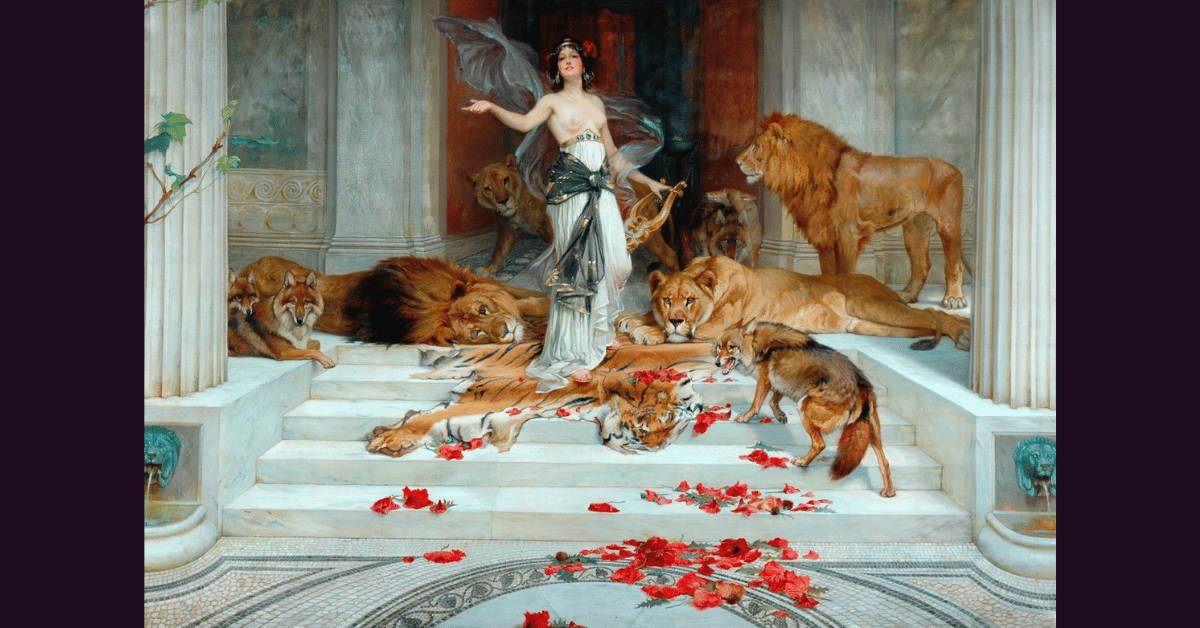
    Now we have Circe living on this fucking island being able to do whatever magical shit she wants. It also seems that when people from the sea would happen upon her island, she would turn them into wolves, lions, and other animals (essentially keeping them with her). Part of me thinks that she did this because they were intruders on her island (this is where the part of Circe that feels like it’s being intruded on comes into play). Also though, I feel like there may have been some loneliness involved in her decision to turn the people who came upon her island into animals – it does seem that for a lot of her life she is lonely (or in a lonely position), and while I’m not sure she totally minds this all of the time (she does seem to like being left to her own devices), she does seem like a place in the chart where we both fear being intruded upon and where we feel incredibly lonely. Perhaps, even a place where we have to come to terms with that in order to NOT feel so lonely, a certain amount of “intrusion” has to occur.
    **I also think it’s important that Circe in a natal chart knows how to decipher actual intrusion from other people who mean to intrude v people who might seem intrusive but might not mean to be that way. Wrath obviously doesn’t need to be unleashed on both of these groups (only on the former, really). I think the Circe person might need to come to terms with the fact that some intrusion is necessary to get rid of the lonely feeling this asteroid might bring. The Circe person just needs to be able to figure out what kind of intrusion they actually can handle (and the kind that they might actually need).

    Odysseus and his men washed up on the shores of Aeaea, and a lot of the men went exploring the island and came up on Circe’s palace. Circe, probably feeling intruded upon, ended up giving the men something to eat and drink that was filled with a potion. One of the guys had his spidey senses go off (sensing something was wrong) and hung back while everyone else ate and drank what Circe gave them. Then all the men turned into swine, and the other guy (who’s fucking name I can’t remember) went to Odysseus and told him what happened. Odysseus was prepared for this (he has been prepared for something like this by Hermes who told him to eat the plant Moly to ward off any magical attacks). When Odysseus confronted Circe, she gave him something to eat and drink too (that was also laced with the potion). When he didn’t change into swine, she was shocked…and it actually seemed like she LIKED this about him. On the spot she pledged her love and devotion to him along with turning his swine men back into real men– it almost seemed like she thought that she had met her match.
    –But did she really meet her match? No. Think about it – if Odysseus hadn’t been warned about a magical attack, and hadn’t known to eat the Moly plant, he would’ve turned into swine just like the rest of them. They all would’ve remained weeping pigs on her fucking island. He also didn’t stay around for the long haul which doesn’t surprise me. If she had really met her match, that actual match probably would have stayed around longer. It’s important that Circe in natal chart actually meets it’s true match (both within oneself and in relationships with other people). I also think, when the Circe person really loves themselves, they are more able to know what and who their true match actually is.
    **I bring this up because patriarchal bullshit would like to paint Circe as a trickster who used her magic to attack men. Clearly, she didn’t just go after men (lol she turned Scylla, who was female, into a sea beast). Also though, it seems that Odysseus tricked Circe, too. For this reason, I think Circe in a natal chart can be where we can do some tricking, but also where we ourselves can be tricked as well. Depending on where Circe falls in the chart, how she functions by sign, and the aspects that she makes, this might involve being tricked by others, being tricked by ourselves, or maybe a little from both columns.  

    There is more to her mythology, but I am going to stop here because this is enough to illustrate how I read her in a natal chart (for now, anyway). When I mention a “strong Circe” in a natal chart, I’m thinking people who have asteroid Circe conjunct a natal planet, an angle, the Nodes, etc. within 2-degrees. You can probably extend this orb out further for the Sun, the Moon, the chart ruler, etc. (I would think 4-degrees max for these big players in a chart).  Obviously though, the closer that Circe is to being exactly conjunct a planet in the chart, the more impact the asteroid will have (infusing it’s energy into the planet in question). If you want to include other aspects beyond just the conjunction, feel free to do so (I just bring the conjunction up because it is the one that I work with the most in regard to asteroids).

    Want me to read some asteroids like Circe in your own astrology chart (or any astrology chart)? Feel free to reach out for a reading ^_^ I definitely do include asteroids by request (they aren’t always something that I pull in general chart readings, but if you want me to pull some, I definitely can include them).

  • Lilith (Part I) or: “Mama, they call her a bad girl, all because she wanted to be free.”

    Lilith is a common thing to come up in readings (people often have questions about her). Not only that though, but I’m constantly seeing questions about Lilith on the different forums that I creep on & answer questions. “How does she affect my life?” “What does it mean to have Lilith in Libra in the 6th House?” “What does it mean that she’s in conjunction with my Midheaven?” “Does having Lilith in the 8th make me a fucked up bitch?” These are just a few examples of questions that I’ve either received myself or just seen posted different places. I think before you can really understand HOW Lilith affects your life by placement in the natal chart, it is important to not only understand who Lilith was, but also to make sure that you know which Lilith you’re talking about. There are actually four Lilith’s that can be pulled in a chart:

    -Asteroid Lilith – No. 1181
    -Black Moon Lilith (mean) – this is what comes up when you choose the Lilith option on astro.com
    -Black Moon Lilith (true) – h13
    -Dark Moon Lilith/Waldemath’s Moon – h58

    So, if you use Astro.com at all to create charts, Black Moon Lilith (mean) is probably the version of Lilith that you are most familiar with (since it’s the one that comes up when you look for Lilith under “additional objects”). Also, this is the version of Lilith that is commonly used when looking at charts and talking about Lilith. Both Black Moon Lilith’s (mean and true) aren’t actual objects in the sky, but they are the apogee of the Moon’s orbit…meaning this is the place in the Moon’s orbit that is furthest from the Earth. The difference between the mean and true Black Moon Lilith (BML) is mean BLM is taken from an average and the true BML is the actual calculation of the apogee of the Moon’s orbit. This sort of empty-void-hypothetical-point is a place where one can do “good” or do “bad.” They can take Lilith’s intuitive and psychic energy and use to it to connect to “the other side” (and connect that other side to themselves) in a positive way, or in a negative way.

    As far as the story of Lilith goes, supposedly she was created from the earth to be the wife of Adam (at the same time as Adam), before Eve. Adam wanted Lilith to be submissive to him, specifically sexually, and wanted to fuck her with him on top, and only him on top. Lilith wasn’t having any of this bullshit; she wanted the relationship to be more equal in nature and wanted to fuck in various different positions. Adam didn’t like this (and I guess God didn’t like it much, either) because it is said that she either grew some wings and flew away from that paradise prison, or that she was cast out by God for being a disobedient bad girl towards Adam. Her job was to be Adam’s bitch, and she didn’t want to play ball. It is at this point, once she is either cast out of the Garden of Eden or chooses to leave on her own, that she turns to the darker side of things (such as hooking up with and fucking some demons and having demon babies which are then killed, turning into a snake, and actually killing children). Or so the mythology says depending on what version you read. Who really knows? I DO think she gets a bad rep though (she probably doesn’t usually mind this). While I believe her energy absolutely can manifest in more challenging ways in one’s natal chart (such as obsession and the “darker” sides of sex), I also believe that she can represent wild and uninhibited freedom and/or sexuality from oppression. This isn’t a bad thing for a person to embrace, it just depends on how it is embraced. She represents the sort of “nasty woman” energy (or whatever you want to call it) that more patriarchal societies don’t want to see in their countrywomen….and if they actually had their way, would probably try and do away with completely. But that’s another rant for another time.

    *As far as how Black Moon Lilith might express herself, you will find below some ideas about how Black Moon Lilith might express herself in Aries through Virgo (some ideas for Libra through Pisces are in this post). This is will only show the HOW of how she expresses herself through the sign in question. You will also need to look at the house your BML falls in to know WHERE/WHAT AREA OF LIFE she expresses herself through, as well as taking into account any aspects that she makes in your chart.*

    Black Moon Lilith in Aries: BML in Aries is very impulsive and all about expressing her knee jerk reactions. She can get quite “heated” about things that she cares passionately about, as well as about things that really piss her off. She gives plenty of drive here to the person, just depends on how this drive is utilized; does it manifest in a positive & passionate way, or does it come about with the need to dominate over certain areas of one’s life? Depending on other factors (such as house placements and any aspects that are made to BML), she could enhance your instincts in a positive way, or a negative way….instincts play a part regardless of how they manifest. Also, depending on the other factors involved, she could really drive you towards the sexy-time side of things (such as being very driven to get some, like, all the time), or she could drive you towards focusing on other things completely (not really driven towards sexy time at all). And if you are driven more towards the side that wants sex all the time, it’s probably of the more primal, physical, and even aggressive variety. To have her show up more positively, give her the independence that she needs to thrive. Just try to guide this independence into constructive or positive outlets.

    Black Moon Lilith in Taurus: This is actually one of the most “natural” placements for BML, for she was created of the earth (and Taurus exhibits the female sort of earth energy in way that Capricorn and Virgo feel restricted). BML in Taurus is all about wanting to quench her desires in the 5 physical senses, and completely for herself. She is sensual, earthy, and usually quite desirable to both the same sex and the opposite sex alike. She is all about pleasure, and leisure, and really wants to manifest these in her life, and will probably go to great lengths to obtain them. She really is pretty much the ideal lover in this sense. Not having those creature comforts in her life will bring out her darker side, as will any sort of insecurity in her own self worth, and that dark side deals with possessiveness and not easily letting go of things she holds on to. She is very possessive of what is “hers” (and this can absolutely include her partner) and can also attract people to her that feel the same of her in turn. Depending on other aspects would show how she may come about in one’s life, and how to keep the possessiveness in check. Being very connected to Mother Earth in some way really stands out here, and just feels right. She needs this to function properly and positively.

    Black Moon Lilith in Gemini: BML in Gemini wants (excuse me, needs) to be mentally free, and able to explore all of her different curiosities. She will easily rebel if she feels that she can’t engage her mind in this fashion, and it would probably make her feel quite anxious and “heavy”. Because we’re talking about Gemini there is a polarizing effect, oscillating between extremes . This will come out in her curiosities (and what she is actually curious about and how this effects her will be based on house location and aspects). Some of the things she will be naturally curious about will make her mind soar to new heights, and in some cases it will be like curiosity killing the cat. As far as sexuality goes, Lilith here usually has no problem trying on a variety of different partners for size to see what fits, or for the experience of it all. She might even be down for group sort of sexual activities here (no judgment if so, you do you, girl/boy). The less freedom that she feels in her own mind, or should she become more bogged down with gossip/petty shit that really doesn’t matter, the more this placement will take a negative turn.

    Black Moon Lilith in Cancer: BML in Cancer is placement where she doesn’t always feel at ease. Cancer is all about feeling safe & secure, while Lilith kind of throws caution to the wind. The feeling of unease will possibly be even more prominent than in, say, Virgo, because Cancer also rules over the deepest parts of one’s conscious mind (making Cancer very privately aware of BML’s energy). BML is also very, very intuitive in Cancer, which can be used for one’s benefit. You will feel a strong need to care and nurture other people, which is fine, just make sure that this is something that you actually want to be engaged in and not something that you feel you have to do (or that you’re doing it for the “wrong” reasons). Regardless of this, you will feel a strong protectiveness towards your family & your home, but you may also feel a strong urge for freedom & independence from them as well (so the dynamic can feel off, or uneasy). The aspects and house placement in one’s chart will tell more of her story here and how work with her instead of against her. Also, sexuality here can become so private that Cancer may not allow themselves to embrace their own sexuality (especially if it’s of the kinkier variety) even behind locked doors. If this happens to be suppressed for too long, it can cause Lilith to bust at the seams and come out in real life at inappropriate times. And if this happens to be the case, this almost secrecy about sexuality, it was probably instilled in childhood somehow, someway.

    Black Moon Lilith in Leo: BML in Leo needs to be able to express herself and her energy authentically and creatively. She is also very glamorous, sparkly (albeit in a slightly “darker” way), and absolutely full of charisma. She has the ability to really captivate/mesmerize her her audience and is probably able to do this with great ease. The issue of sexuality here is something that probably won’t be as difficult for one to embrace, depending on where Lilith lives in one’s chart. BML in Leo is desirable to the same & opposite sex, and this placement probably gets off somewhat on knowing this and embracing this sort of sexuality out loud. The only catch to all of this that sounds so good? The reasons behind of all of them (meaning you will want to look at house placement and aspects, for sure). Is the charisma she exudes in Leo used for manipulation purposes to the detriment of someone else, or is the Charisma actually a natural part of her authentic self? Is the openness of her sexuality something that is really part of who she is, or does she use it as a way to keep from getting hurt? Is the healthy & vivacious ego that she presents here actually real, or is it seriously super-inflated into narcissism territory? Or is the outward ego just a mask she wears because she has no firm grasp on her true self? Getting to the bottom of authenticity is super important here.

    Black Moon Lilith in Virgo: BML in Virgo isn’t always the most comfortable place for her to find herself. She wants to be wild and uninhibited, and Virgo’s energy will kind of try to repress everything that BML wants to do. She wants to be wild and free, but Virgo tries to bring the reins in on her. She wants to be able to fully and freely express her sexuality, but she is held back. Virgo is rather nervous by nature, and having such a sexual sign that pretty much represents everything that Virgo is not, will make Virgo, well, nervous. Virgo doesn’t like to do anything useless, and any natural sort of embracing of Lilith here will be done through a vehicle of helping, serving, or healing. Sex here can feel like work, sex can feel like having to serve someone else, or hell, some type of sex work could even be in the cards here. You’re thinking, “what” right? Virgo does need to be of service to others, which is why I bring up work in sex the industry (Virgo making Lilith useful). Since Virgo also deals with unequal sorts of relationships, it will have to come to terms with it’s own views on the Madonna/Whore archetypes, and know that by letting Lilith come out to play in a healthy way doesn’t automatically swing you in “impure” direction. It is important that Lilith is embraced here, for I feel like it could case the native a whole host of physical & mental issues otherwise.

    If you would like for me to read Black Moon Lilith (mean) in your chart, or any of the Lilith’s, you can set something up with me here.